GHK-Cu, GHK and the tested formulation
A copper complex, a free peptide and a topical combination can appear in the same conversation. Their experimental identities deserve more room.
A plasma discovery
GHK was isolated from human plasma in 1973 by Loren Pickart as a factor that prompted aged liver tissue to make proteins more like younger tissue. The 2015 review of GHK biology follows the peptide into skin research. Its sequence is glycine-histidine-lysine; coordinated with copper(II), it becomes GHK-Cu, also called Copper Tripeptide-1 in cosmetics.
The liver-tissue starting point appeals to my taste for odd origins. The original observation concerned protein production in liver tissue. Its later cosmetic life grew from further experiments; the plasma origin alone would never establish an anti-aging treatment.
GHK names the peptide. GHK-Cu names the copper-bound complex. The distinction travels into the study results.
Topical skin findings
The 2025 review of topical GHK reports increased procollagen synthesis in 70% of GHK-Cu-treated subjects, compared with 50% for vitamin C and 40% for retinoic acid. These percentages describe the share of subjects with increased synthesis. They do not measure a percentage increase in collagen or a percentage reduction in wrinkles.
The 2015 review also describes small controlled topical studies of skin laxity, clarity, fine lines, density and wrinkle depth. I take these measured outcomes seriously while remaining unconvinced by broader promises about reversing aging. The formulation, route and outcome specify the result much better than that slogan does.
Delivery remains difficult. The recent topical review describes poor permeability of native GHK through the skin barrier and research on lipid attachment and microneedle pretreatment. Those are formulation investigations, not instructions for using a product.
Excised skin measurements
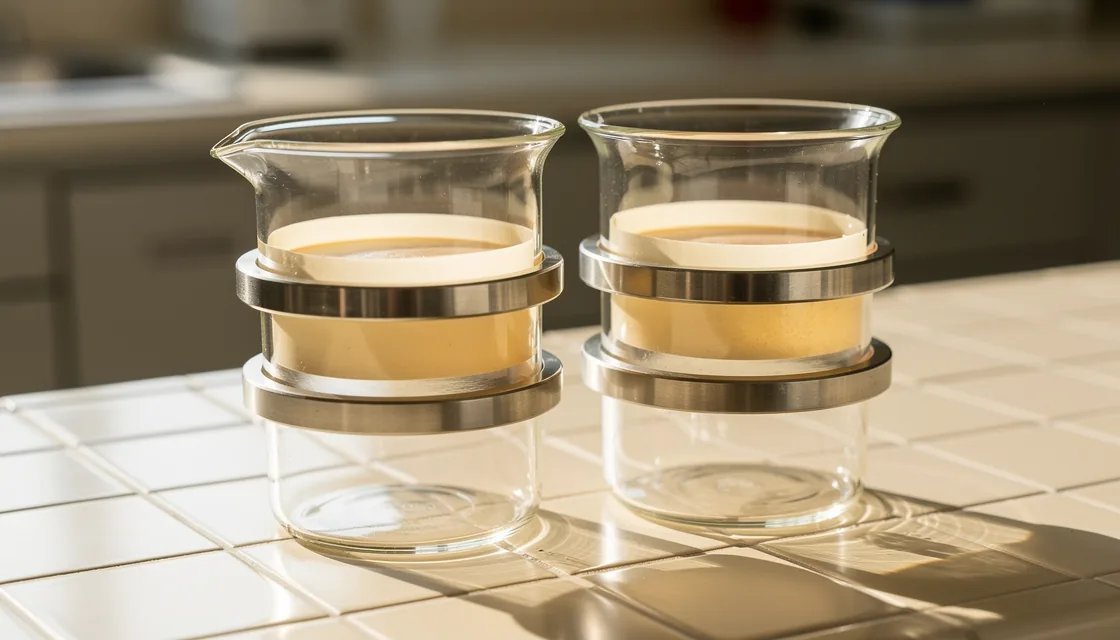
The 2011 penetration experiment used excised human skin, separated by skin layer. Over 48 hours, 136.2 ± 17.5 micrograms of copper per square centimetre permeated dermatomed skin, and 97 ± 6.6 micrograms per square centimetre remained as a dermal depot.
The tissue was human; the experiment was outside the body. I resist quietly promoting that measurement into a clinical outcome. It shows copper transport and retention under those experimental conditions, which is already useful information for a formulation question.
The 5-aminolevulinic acid + GHK trial
A 6-month trial in 45 men with androgenetic alopecia used a topical complex of 5-aminolevulinic acid and GHK. Hair-count increases were 52.6 at 100 mg/mL and 71.5 at 50 mg/mL, compared with 9.6 for placebo; no adverse events were reported in any group. These are the trial's formulation concentrations and outcomes, not a personal-use recommendation.
This study tests a combination. Its whole result cannot be assigned to GHK alone, still less to an injectable GHK-Cu product. That attribution is precisely where an otherwise interesting finding can acquire the wrong name.
Gene activity
The 2018 gene-data review describes GHK-associated changes in approximately 31.2% of measured human genes at a 50%-or-greater change threshold, with 59% of affected genes upregulated and 41% downregulated. This is cell and database work, including Connectivity Map analysis, rather than a clinical trial measuring human rejuvenation.
I want those gene signals followed through further biological testing. A broad gene signature can suggest pathways to examine; protein-level and in-vivo validation would make its implications much clearer.
GHK-Cu safety
People describe firmer-feeling skin, hydration and softer-looking lines, along with irritation, dryness, breakouts or pigment changes. These are anecdotal reports, not clinical evidence. Reports about injectable use sit outside the small topical clinical record entirely.
GHK-Cu has no FDA-approved therapeutic indication; topical Copper Tripeptide-1 is a cosmetic ingredient. The topical and delivery literature provides no validated human basis for systemic use. Copper-handling disorders raise a theoretical accumulation concern with systemic exposure, and changes in copper coordination or formulation stability can alter behaviour. Those questions also follow GHK-Cu into GLOW and KLOW.